

In July last year, I opened my blog Uncertainty is a Tough Opportunity with “Uncertainty is a tough opportunity for leaders. How can it be otherwise? If there was enough certainty, where’s the challenge?”
Given we now have AI in the mix, on top of all the other macro risks we’re facing, the opportunity must be immense, right? Maybe, maybe not, because not everyone needs wholesale change.
My 25 years helping leaders navigate different types and levels of uncertainty has made one thing clear: identifying the type of uncertainty your organisation is experiencing is key to determining the action you take. It’s so important, I’ve created the below Strategic Uncertainty Framework to help them decide what’s right for their organisation right now.
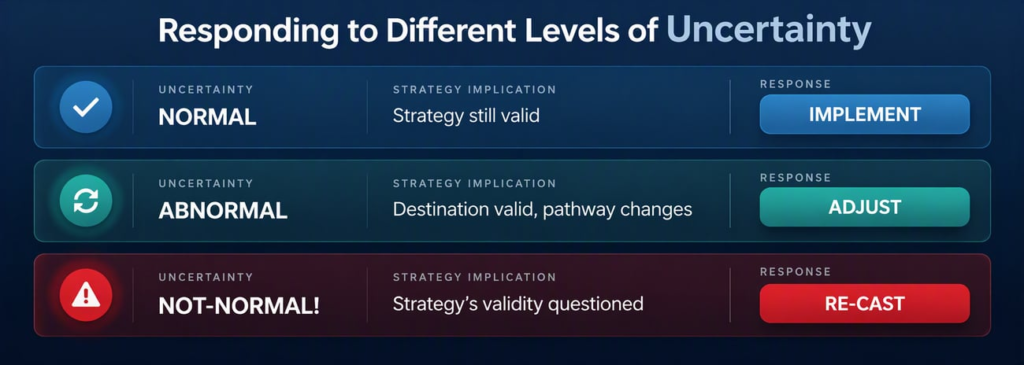
Bryan Whitefield’s Strategic Uncertainty Framework
For a Normal level of uncertainty, it’s essentially the same game. This means that for some organisations, not much changes. Take the ATO for example: Regardless of changes in tax policy, the tax office’s game stays the same. Like all good teams, you will seek to optimise opportunities that improve efficiency and effectiveness while managing the cyber and fraud risks posed by technological advancement.
For an Abnormal level of uncertainty, it’s the same game, different conditions:In this situation you might find that your end game doesn’t need to change, however some of the assumptions it was based on are no longer valid, prompting you to adjust your strategy. Take the insurance industry. Inflation drives up claims costs and climate change increases frequency and severity of claims while AI startups pose a threat to underwriting margins. Plus, there are the same technological risks associated with cyber and fraud.
A Not Normal! Level of uncertainty needs a different game: In these circumstances, taking a step back and having a look at the game you’re playing can make it clear that it can’t be won and you need to play a different game. Take professional services, where the traditional economics of the industry are shifting, largely from information becoming incredibly accessible at low cost. Clients are questioning billing methods and the firms themselves are redesigning entry-level work, changing the traditional up and out pyramid model of graduate to partner. It’s time to re-cast your strategy.
As I pointed out in last week’s blog, the biggest risk is misdiagnosing which level of uncertainty you are facing. And you will often find divergent views across your leadership team.
Which leads me to ask: Are you implementing, adjusting or re-casting, and what evidence tells you that’s the right response?
And, as always, I’d love to hear your thoughts.